“BRB ya, lagi hectic banget hari ini.”
“Posting-nya simple aja tapi tetap catchy.”
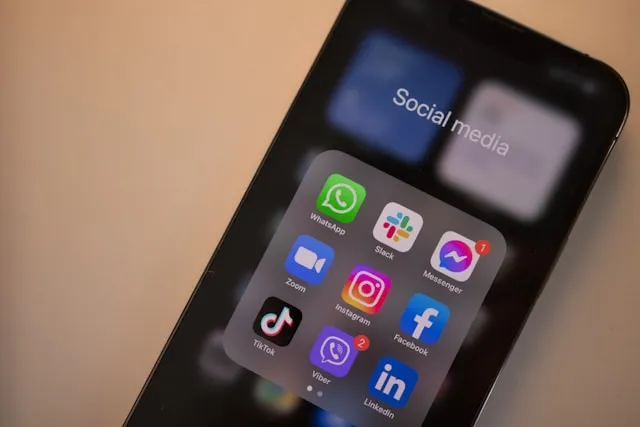
If you’re active on social media whether it’s Instagram, X, TikTok, or WhatsApp phrases like these will surely sound familiar. English and Indonesian are mixed together seamlessly, without feeling awkward. For many people, especially young people and students, this way of speaking has become a daily habit. Without realizing it, social media has shaped the way we use English, not just as a foreign language, but as part of our daily communication. This phenomenon is not just a passing trend. It reflects changes in the way we speak, think, and express ourselves in the digital age.
What Is Social Media-Driven English?
Social media-driven English refers to the use of English that is shaped by communication habits on digital platforms. English no longer appears in formal forms such as textbooks or classrooms, but is present in captions, comments, tweets, and short messages.
Its main characteristics are flexibility, brevity, and contextuality. Sentence structures are often incomplete, grammar is not always standard, but the meaning is still understood by everyone. English in this context functions as a practical communication tool, not just an academic object.
How It Changes the Way We Use English
Social media has transformed English from something that feels “formal” to something more familiar and personal. Many people who may be hesitant to speak English in class feel more confident using it on social media.
Words such as update, relatable, engagement, healing, or content are widely used without needing to be translated. English has become part of everyday life, often mixed with Indonesian in the same sentence. This change shows that English is no longer positioned as a completely foreign language, but rather as a social language that coexists with the local language.
Positive & Negative Effects
On the positive side, social media opens up a wide space for language practice. Users are exposed to new vocabulary, variations in expression, and diverse contexts for using English. This helps improve language sensitivity and enriches the range of expression.
However, there are also challenges that arise. The habit of using social media English sometimes carries over into formal contexts, such as academic assignments or official writing. In addition, excessive simplification of language can make users less aware of good and correct language structure.
The problem is not with social media itself, but rather with a lack of contextual awareness. Effective language is not a matter of right or wrong, but of appropriate or inappropriate use.
What This Means for English Learners
For English learners, social media can be a double-edged sword. On the one hand, it provides a natural and relaxed learning environment. On the other hand, without proper guidance, learners may find it difficult to distinguish between informal and formal language.
Therefore, what is needed is not prohibition, but language literacy. Learners need to understand when social media English can be used, and when they should return to a more standard structure. The ability to switch between language styles is the key to communication competence in the digital age.
Language continues to evolve alongside societal changes. Social media is merely one space where these changes occur at an accelerated pace. The way we use English today is not a sign of regression but evidence that language is a living, dynamic system that constantly adapts.
Writer: Fairisya Nur Rahmah