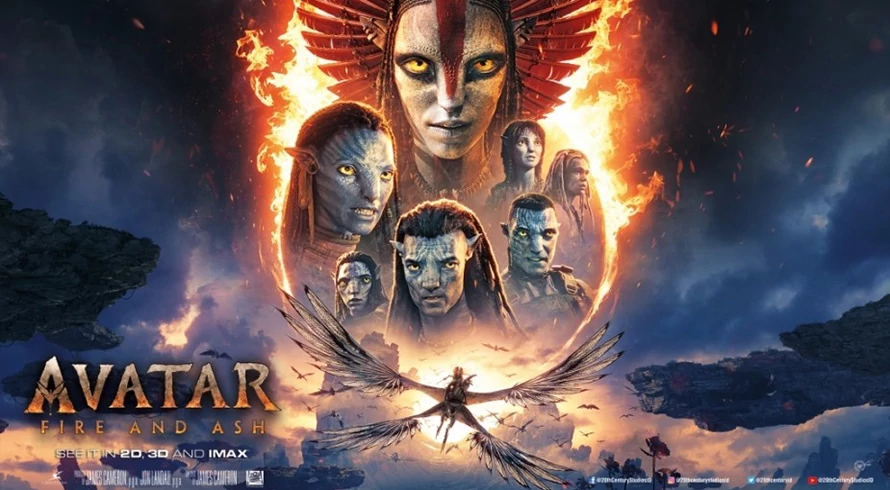
NEWSFEED.ID, Tangsel — Unresolved trauma often shapes how people see the world, especially in stories about conflict, survival, and power. In Avatar: Fire and Ash, this idea is clearly shown through the character of Varang and the Mangkwan clan. The film raises an important question: why does Varang hate the Na’vi, and why does the Mangkwan clan continue to use power to oppress them? Varang is portrayed as someone deeply wounded by her past.
After losing her clan and receiving no help from Eywa during their darkest moment, she comes to believe that kindness and faith are useless. In one scene, Varang states that she survived only by oppressing others, showing her belief that power is the key to survival. Through Varang’s experience, the film presents unresolved trauma as a force that turns pain into violence. This essay explores how Varang’s trauma shapes her identity, her choices, and the way she uses power to stay alive.
First, Avatar: Fire and Ash reveals that Varang’s anger for the Na’vi springs from unresolved suffering. Varang lets her suffering influence how she perceives other people rather than face her loss. According to trauma research, individuals who suffer significant loss frequently exhibit increased fear and aggression when they perceive danger (Silove et al.,
2017). Varang’s attitude that dominance is essential for survival is an example of this. Her behaviours also support Van der Kolk’s (2015) theory that trauma affects instincts and reactions in the body in addition to memory. Varang acts out of fear rather than strength, as evidenced by her strict leadership style and persistent demand for control. She views the Na’vi as opponents that need to be controlled rather than as equals.
Second, Varang’s choice of leaving Eywa is among the most obvious indications of her trauma. This happened after a volcanic eruption destroyed the Mangkwan clan’s land, killing many of its people as well as their home. Varang feels totally abandoned at that very moment. According to research, trauma can destroy a person’s sense of purpose and religion, particularly when their suffering seems unfair or unresolved (Miller & Rasmussen, 2017). This loss of significance is reflected in Varang’s rejection of Eywa. She decides to trust fire, something she can see, use, and control, instead of spiritual guidance. This reaction is consistent with the World Health Organisation’s (2018) argument that when people lose faith in moral or spiritual order, they frequently turn to control as a coping strategy due to ongoing stress and suffering.
Third, Varang’s leadership illustrates how a community as a whole can be impacted by personal trauma. She believes that authority is the only way to protect her people; she rules with terror and tight control. According to Hirschberger (2018), a group’s shared trauma can alter its ideals and make violence seem acceptable or even necessary. According to Alexander et al. (2016), communal trauma also plays a role in defining who is viewed as the enemy and who belongs. The Mangkwan clan’s identity is based on suffering, dominance, and resistance against the Na’vi under Varang’s authority. Varang uses trauma as an excuse to control others rather than aiding in the healing of her people.
Lastly, Varang’s behaviour shows a lack of strength and recovery. According to Bonanno (2017), resilience allows people and communities to deal with trauma without turning
to violence. Varang’s decisions, however, indicate the opposite reaction. She creates dominance and fear rather than healing. According to research on trauma recovery, trauma frequently reoccurs through negative behavioural patterns in the absence of appropriate support and processing (Nickerson et al., 2018). Varang’s rule illustrates how unresolved trauma resurfaces as anger and control rather than going away.
In conclusion, Varang is portrayed in Avatar: Fire and Ash as a character shaped by unresolved trauma that transforms suffering into ruin. Her rejection of Eywa, her hate of the Na’vi, and her dependence on repressive authority are the results of deep emotional scars that have never been healed. According to modern trauma theories, trauma frequently resurfaces as fear, dominance, and recurrent violence when it is forgotten (Van der Kolk, 2015; Silove et al., 2017; Hirschberger, 2018). The film uses Varang’s tragedy to educate audiences that survival based on power and dominance only makes loss worse. The movie implies that healing, strength, and responsibility, rather than dominance over others, are necessary for true survival.
Written by Siti Satriah
Universitas Pamulang